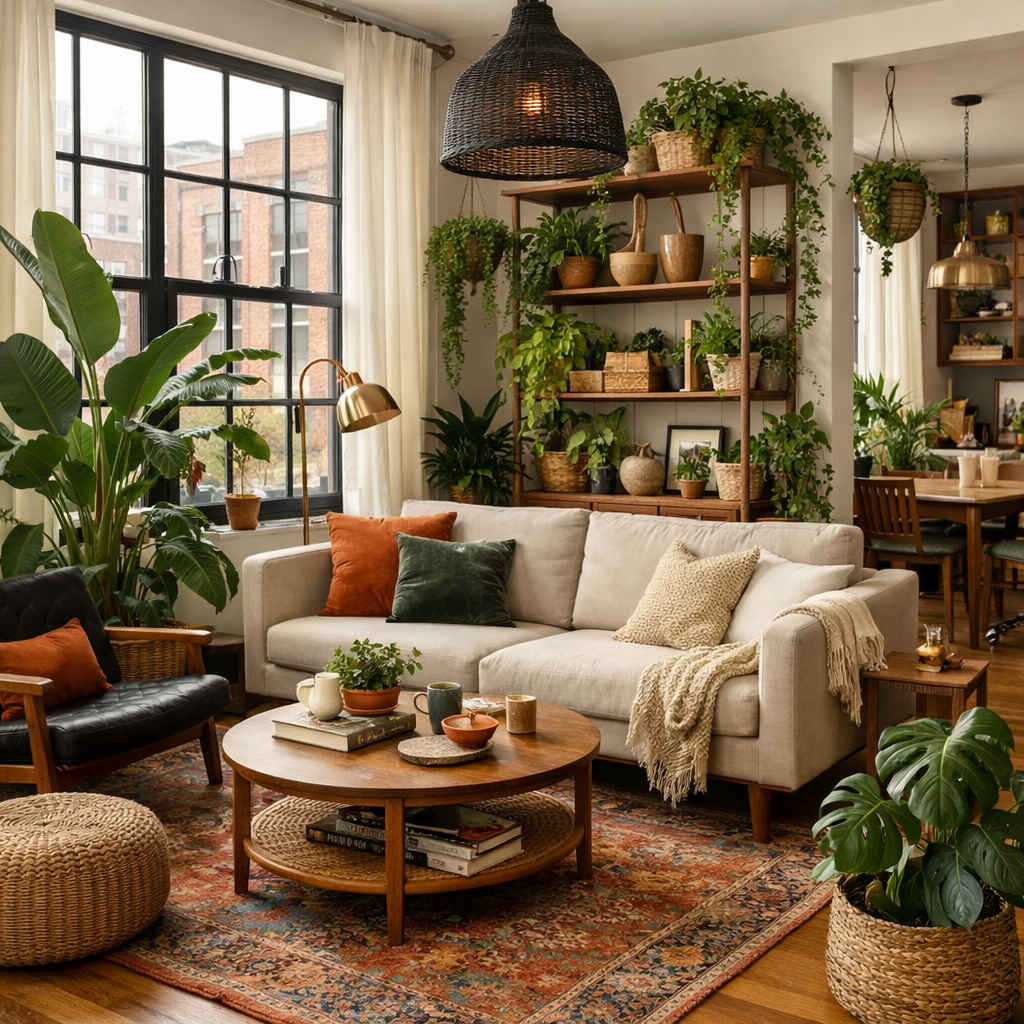
The Cheapest Office Upgrade You're Probably Not Making
A standing desk costs $800. A new chair costs $600. A handful of well-placed plants costs a fraction of either — and the evidence that they improve how people feel at work is, at this point, pretty hard to argue with.
We're biased, obviously. But we also spend a lot of time in offices, and we've watched what happens when a space that was previously all hard surfaces and fluorescent light gets a few living things in it. The change is faster than people expect, and it's not subtle.
Here's what the research says, and what we've seen ourselves.
People Work Better When They're Near Plants
Multiple studies over the last decade have found that the presence of plants in office environments is associated with higher self-reported productivity, better concentration, and lower stress levels. The most cited research — including work out of the University of Exeter — found that "lean" offices with no natural elements produced measurably worse outcomes than offices enriched with plants and natural light.
The theory is rooted in biophilic design: the idea that humans have an innate need to connect with natural environments, and that workplaces which satisfy that need — even partially — reduce the cognitive load that comes from spending long hours in sterile, artificial spaces.
You don't need to transform your office into a greenhouse to get the effect. The research suggests meaningful impact from relatively modest interventions — a few plants per workspace is enough to shift how people experience the environment.
Air Quality Is a Real Factor, Not a Marketing Claim
Plants absorb CO₂ and release oxygen. Some — Snake Plants, Peace Lilies, Spider Plants — are particularly effective at filtering common indoor air pollutants like benzene and formaldehyde, which off-gas from furniture, carpets, and building materials in concentrations that are low but consistent.
We're not claiming a few office plants will solve your air quality problems. But in offices where the HVAC is aging or windows don't open, adding plants is a low-cost intervention with a credible mechanism. And it's one of the few things you can do to improve the physical environment that doesn't require facilities approval or a capital budget. 💲
It Signals That the Environment Matters
This one is less about the plants themselves and more about what they communicate.
When a company invests in making a space feel alive — real plants, not plastic ones, properly maintained rather than wilting in a corner — it sends a message to the people who work there. The message is roughly: we think about the quality of this environment, and by extension, we think about you.
This is why maintenance matters as much as installation. A dead plant is worse than no plant. It reads as neglect, which is the opposite of the signal you're trying to send. Every corporate client we work with gets a dedicated account manager and a maintenance schedule specifically because we've seen what happens when a well-intentioned plant installation is left to fend for itself.
The ROI Is Easier to Justify Than People Think
The calculation most companies do when considering office plants goes something like: plants cost money, and it's hard to prove the return.
Here's a reframe. The average fully-loaded cost of an employee — salary, benefits, overhead — is significant. If an investment in the physical environment produces even a modest, sustained improvement in how people feel at work, the return on a few thousand dollars in plants and maintenance is enormous relative to the cost. You don't need a dramatic effect. You need a real one.
The harder question is whether you'll measure it. Most companies don't, which is why the ROI feels speculative. If you're serious about the question, run a simple before-and-after on your employee satisfaction survey alongside an installation. The data tends to be more persuasive than the studies, because it's yours.
Where to Start
If you're thinking about bringing plants into your office for the first time, our recommendation is to start with one area rather than trying to do the whole space at once.
Pick your highest-traffic common area — a lobby, a kitchen, a main conference room — and do it well. A few well-chosen, well-maintained plants in one visible space will do more for how people perceive the environment than a scattered handful across every floor.
From there, you'll have a proof of concept that's easy to expand.
If you want to go further — or if you want the installation to be genuinely beautiful rather than just functional — that's where we come in. Our corporate team handles everything from the initial consultation and custom plant plan to installation and ongoing maintenance. You don't have to think about it after the first conversation.
And if you want your team to connect with the plants directly — our private workshops are one of the more unexpected team-building formats we offer. Propagation, terrarium building, repotting — tactile, low-stakes, and genuinely enjoyable. People talk about them afterward in a way they don't talk about most team activities.